Subtract your clock-in time from your clock-out time, then subtract any unpaid break. If you clock in at 9:00 AM and clock out at 5:30 PM with a 30-minute unpaid lunch, you worked 8 hours.
For payroll, convert the leftover minutes to decimal hours by dividing by 60. 8 hours 15 minutes becomes 8.25 hours.
Clock In / Clock Out Calculator
Enter your clock-in and clock-out times for each shift. Overnight shifts and unpaid breaks are handled automatically.
How a Clock In and Clock Out Calculator Works
A time clock calculator takes two timestamps, your clock-in and clock-out, and turns them into the number of hours you actually worked. It does the subtraction for you, handles AM/PM conversion, and accounts for unpaid breaks so you don’t have to do the math by hand every pay period.
Hourly employees use it to check a paycheck against a timesheet. Freelancers and contractors use it to bill clients accurately. Small business owners use it to run payroll without expensive time-tracking software.
The Formula
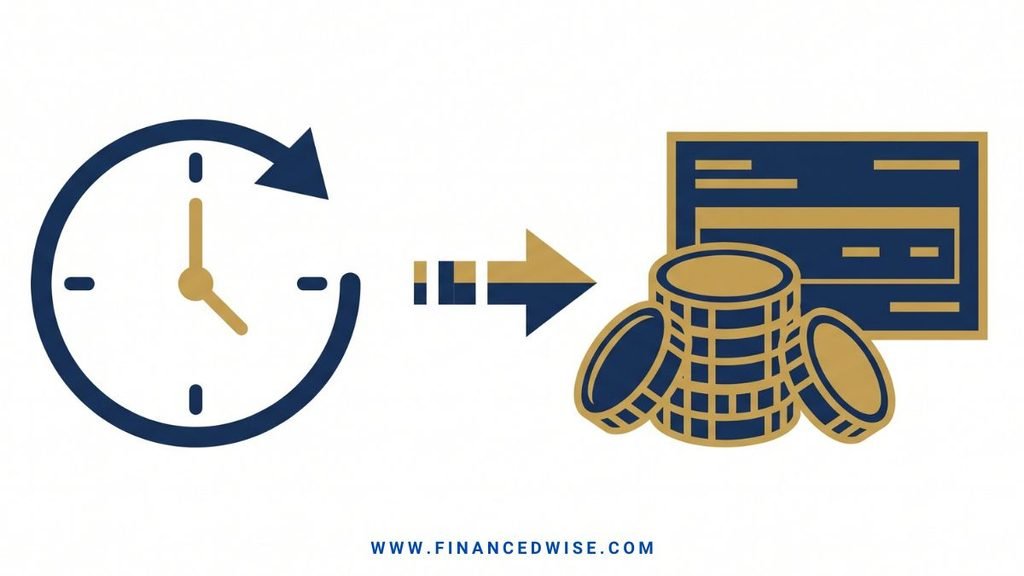
Hours worked = Clock-out time − Clock-in time − Unpaid break time
- Convert AM/PM times to 24-hour format. 2:30 PM becomes 14:30.
- Subtract the clock-in time from the clock-out time to get total time on the clock.
- Subtract any unpaid break or lunch.
- Convert the leftover minutes to decimal hours for payroll: minutes ÷ 60.
| Minutes | Decimal hours |
|---|---|
| 15 | 0.25 |
| 30 | 0.50 |
| 45 | 0.75 |
| 60 | 1.00 |
Worked Examples
Standard shift with lunch Clock in 9:00 AM, clock out 5:30 PM, 30-minute unpaid lunch. Total time on the clock is 8 hours 30 minutes. Subtract the lunch: 8 hours worked (8.00 decimal hours).
Overnight shift crossing midnight Clock in 10:00 PM, clock out 6:00 AM the next day. Add 24 hours to the clock-out time before subtracting: 6:00 AM becomes 30:00. 30:00 − 22:00 = 8 hours worked.
Split shift with multiple punches Clock in 8:00 AM, clock out 12:00 PM (4 hours). Clock in 1:00 PM, clock out 5:15 PM (4 hours 15 minutes). Add both segments: 8 hours 15 minutes worked (8.25 decimal hours).
Overtime and Rounding Rules
Under the FLSA, hourly employees in the US earn 1.5x pay for hours worked beyond 40 in a single workweek. Someone who works 42 hours gets 40 regular hours plus 2 overtime hours.
Many employers round punches to the nearest quarter hour using the 7-minute rule: 1 to 7 minutes past the quarter rounds down, 8 to 14 minutes rounds up. This is allowed under 29 CFR 785.48, but rounding has to even out over time and can’t systematically shortchange employees.
Some states add their own rules on top of this, including daily overtime and mandatory meal breaks, so check your state’s labor office if you’re unsure. This isn’t legal advice, just the general framework most employers follow.
Common Clock In/Out Mistakes to Avoid
- Forgetting to subtract unpaid breaks. A punch clock shows total time on site, not time worked. Lunch and other unpaid breaks still need to come out.
- Mixing up 12 PM and 12 AM. Noon is 12:00 PM, not 12:00 AM. This single mix-up can throw off an entire shift calculation.
- Averaging hours across two weeks. The FLSA calculates overtime on a single workweek basis. Averaging 35 hours one week and 45 the next to avoid overtime isn’t allowed.
- Rounding inconsistently. Rounding one employee’s time down and another’s up, without a fixed rule, creates both payroll errors and compliance risk.
Clock In/Out Best Practices for Employers

- Put your time tracking and rounding policy in writing and apply it the same way to everyone.
- Keep timesheet records for at least three years, which is the FLSA’s minimum for payroll records.
- Let employees review and sign off on their own hours before you run payroll.
- Audit your rounding periodically to confirm it isn’t quietly favoring the business over time.
How do I calculate clock in and clock out time by hand?
Subtract the clock-in time from the clock-out time. Convert to 24-hour format first if you’re working with AM/PM to avoid subtraction errors.
How do I calculate hours worked with a lunch break?
Find the total time between clock-in and clock-out, then subtract the length of any unpaid break. An 8-hour shift with a 30-minute unpaid lunch pays for 7.5 hours.
How do I convert clock in and out times to decimal hours for payroll?
Divide the leftover minutes by 60. 20 minutes becomes 0.33 hours, 45 minutes becomes 0.75 hours.
What is the 7-minute rounding rule?
It’s a common payroll rounding method where punches 1 to 7 minutes past a quarter hour round down, and punches 8 to 14 minutes round up to the next quarter.
How do I calculate overtime from clock in and clock out times?
Add up all hours worked in the workweek. Anything over 40 hours is paid at 1.5x the regular rate under the FLSA.
How do I handle a shift that crosses midnight?
Add 24 hours to the clock-out time before subtracting, so a 10:00 PM to 6:00 AM shift becomes 22:00 to 30:00.
Try It Yourself
Run your own numbers with the calculator above, then see what those hours actually pay out to with our Take-Home Pay Calculator, which turns gross hours into net pay after tax.