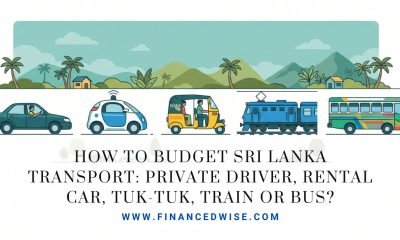
When people plan a Sri Lanka trip, they budget for flights and hotels and treat transport as an afterthought. That’s a mistake. Depending on how you travel, a week of getting around can cost anywhere from about $100 to well over $500 for two people. That’s a wider spread than almost any other line in your trip budget.
This guide covers the five main ways to get around, what each one really costs, the extras that catch people out, and how to pick the right mix for your trip.
The quick answer
If you travel light and don’t mind time, trains, buses and tuk-tuks are by far the cheapest. If you’re a family or a group of three or four, a private driver is often the best value, because one daily price is shared across everyone. Self-drive only makes sense if you’re comfortable on chaotic roads and staying long enough to get a lower daily rate.
A note on currency: figures below use roughly LKR 300 = $1. Check the live rate before you budget, because it moves.
Step 1: Budget your airport transfer first
Most trips start at Bandaranaike International Airport (CMB), which is about 35 km north of Colombo, so your first transport cost is the airport run. Prices vary a lot depending on how you book:
- Public bus: the cheapest option, roughly LKR 290–400, but crowded and with little luggage space.
- Ride-hailing (PickMe or Uber): commonly quoted at roughly LKR 2,500–4,000 to central Colombo. Airport to Negombo is much shorter, typically LKR 500–800 on the app.
- Official airport taxi counter: guides quote anywhere from about LKR 3,500 up to 8,000 depending on destination and the year, so ask for the fixed fare before you get in.
- Pre-booked transfer: often LKR 6,000–9,000, but usually a fixed price that includes the expressway toll.
Watch the expressway toll. The Colombo–Katunayake Expressway toll is around LKR 400. Pre-booked transfers normally include it, but some app drivers add it on top. Late-night fares can also surge by 20–40%, so a 2 a.m. arrival costs more.
If you land late, the best money-saving move is a pre-booked, fixed-price pickup. A driver service such as Lankan Driver can arrange this, so you avoid both the surge and the haggling.
Option 1: Private driver, the all-in-one price
A private driver gives you a car, a driver and fuel for a single daily rate, which makes it the easiest option to budget.
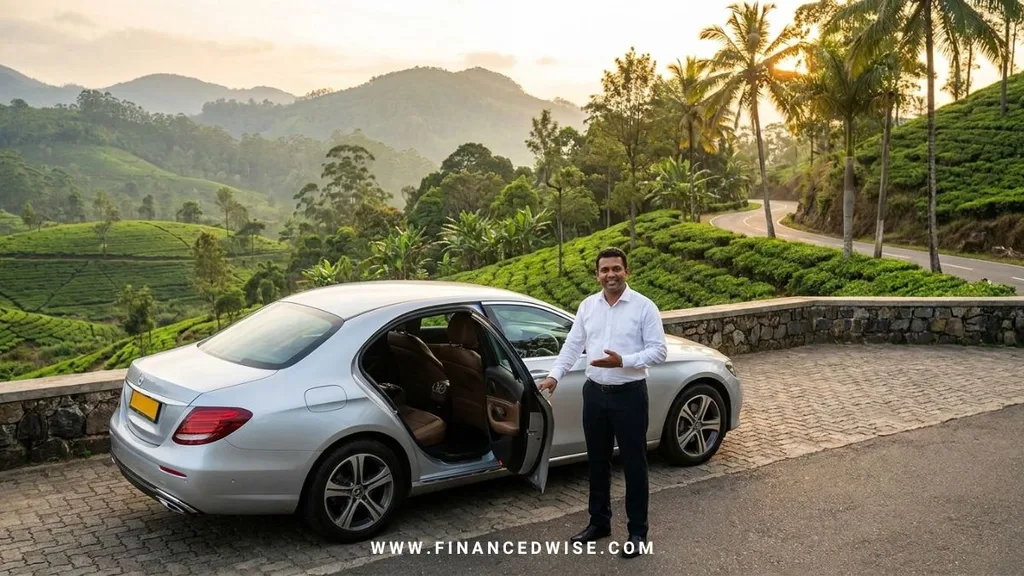
Expect roughly $50–$70 per day for a standard air-conditioned sedan, and $70–$90 for a van. Some operators advertise from about $45 for a hatchback, while SUVs and premium vehicles can run well above $100. Most quotes assume a full day of around 8–10 hours and roughly 100–150 km of driving.
Another way to think about it is per kilometre. One guide puts car-and-driver hire at about LKR 140 per km, not counting the driver’s food and lodging. On that basis, Colombo to Kandy (about 115 km) comes to roughly LKR 16,000, or about $53, one way for the whole car.
Ask three questions before you accept a quote:
- Are the driver’s meals and accommodation included? On overnight trips this can add about $10–$15 a night.
- Are tolls and parking covered?
- Is there a daily distance limit, and what happens if you exceed it?
One warning from a money perspective: a very low quote isn’t a bargain. Rates around $30–$40 a day are often subsidised by commissions from the shops and restaurants the driver takes you to. You can easily spend the “savings” on overpriced souvenirs. Budget a fair rate instead, plus a tip of $5–$10 a day, which is customary.
Multi-day hires are usually cheaper per day than single days, so a 7–10 day tour often costs less per day than a one-off hire.
Cost logic: the more people in the car, the lower your cost per person. See the group-size table below.
Option 2: Self-drive rental, cheap sticker price, extra costs
The advertised price is attractive. Self-drive rentals run about $25–$70 per day, with small cars from around $22 a day on long rentals. Local pricing is also quoted in rupees, roughly LKR 8,000–12,000 a day for small cars and LKR 12,000–18,000 for mid-range sedans.
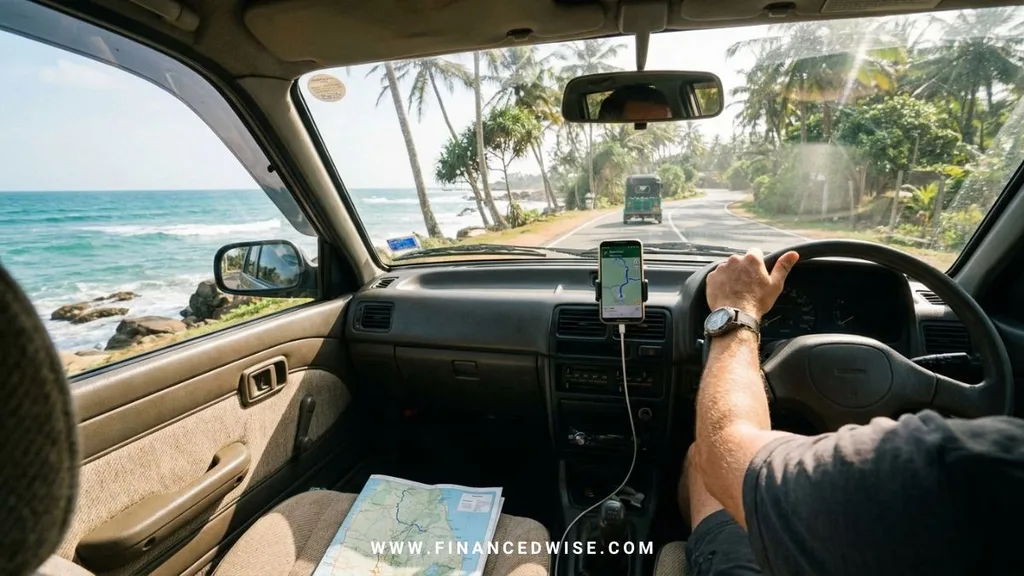
The real cost is higher once you add:
- Fuel, which one guide puts at roughly $20–$50 a day depending on distance.
- A temporary Sri Lankan driving permit. Visitors need one on top of their home licence or International Driving Permit. Some sources report the permit can now be issued at the airport, but rules and fees have been changing, so confirm the current process with the Department of Motor Traffic before you fly. Rental companies may add their own service fee.
- Deposits and insurance excess, which tie up cash on your card.
- Expressway tolls, if you use them. A Colombo–Galle trip on the Southern Expressway is quoted at roughly LKR 400–600 depending on vehicle class.
Then add the time and stress of navigating heavy traffic, buses overtaking on blind bends and animals on the road. Self-drive works best for confident drivers on longer trips, where the daily rate drops.
Option 3: Tuk-tuks and PickMe, pay per ride
Tuk-tuks let you pay only for the distance you actually use. Metered fares run around LKR 100 for the first kilometre and LKR 80–100 per kilometre after that. On the PickMe app you see the fare before you book, which removes haggling. Typical city rides cost LKR 150–250 for 2–3 km and LKR 350–600 for 5–8 km. A full-day hire with a driver (within about 80 km) is around LKR 4,000–6,000.
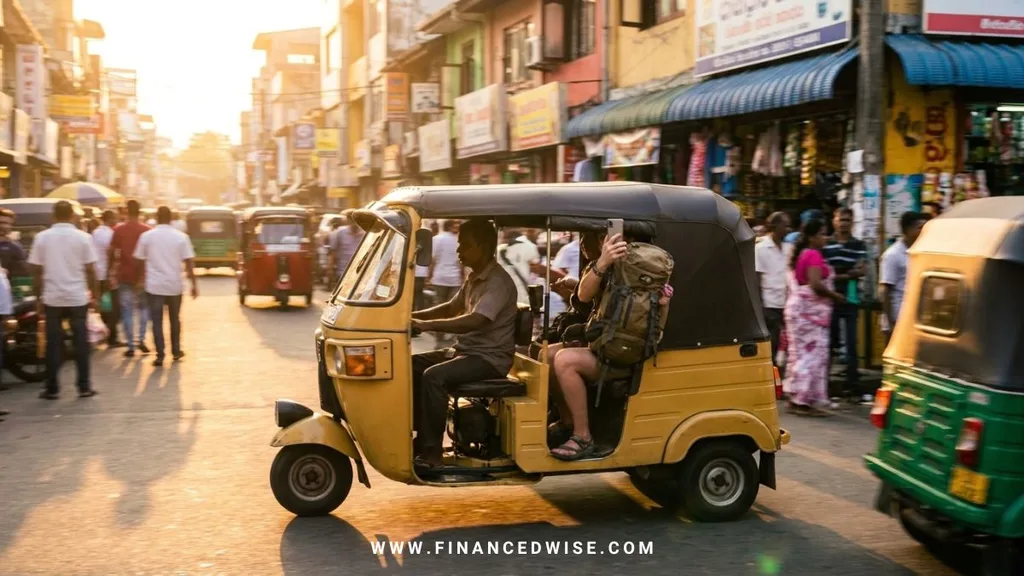
A useful rule on the street: around LKR 80–100 per km is a fair negotiated rate, and anything above about LKR 150 per km for a simple journey means you’re being overcharged. Street tuk-tuks usually want cash, so carry small notes.
The limits are practical. App coverage is strong in Colombo, Kandy, Galle and Negombo, but patchy in small towns and the hill country. Tuk-tuks are also tiring over long distances and have little room for luggage. They suit short hops and local day trips, not cross-country travel.
Driving a tuk-tuk yourself is another budget idea. Rental companies advertise rates from about $14–$22 a day, plus a fee of roughly $40 for the local licence. It can be cheap for couples, but it’s still self-driving, with all the usual risks.
Option 4: Train, the cheapest per kilometre on the right routes
Rail is the budget winner. Ordinary tickets from Colombo Fort to Kandy are around Rs 240 in 3rd class and Rs 500 in 2nd class, and Kandy to Ella is about LKR 300 (3rd) to LKR 600 (2nd) at the station. Reserved seats, first class and observation carriages cost more. The official fare list shows, for example, reserved Colombo–Kandy seats at Rs 1,500 (1st), Rs 1,000 (2nd) and Rs 600 (3rd). See the reserved-seat fare list for current prices.
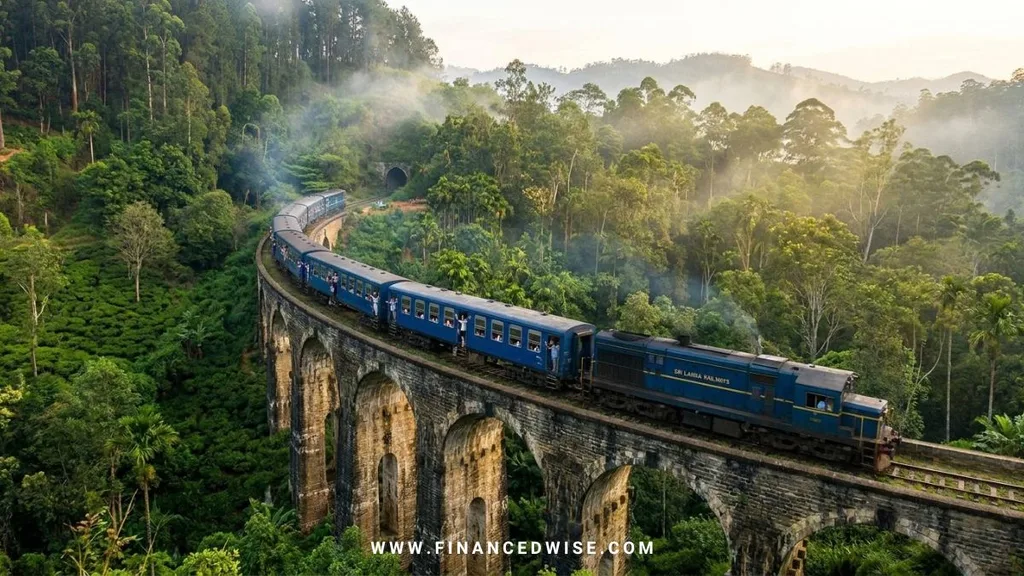
Reservations open about 30 days ahead on the official booking portal, and popular seats on the scenic hill-country route sell out. Online bookings may carry extra fees compared with buying at the station.
The trade-off is time. Trains run slowly and often late, and you’ll usually pay for a tuk-tuk to and from the station.
Option 5: Bus, the lowest fare of all
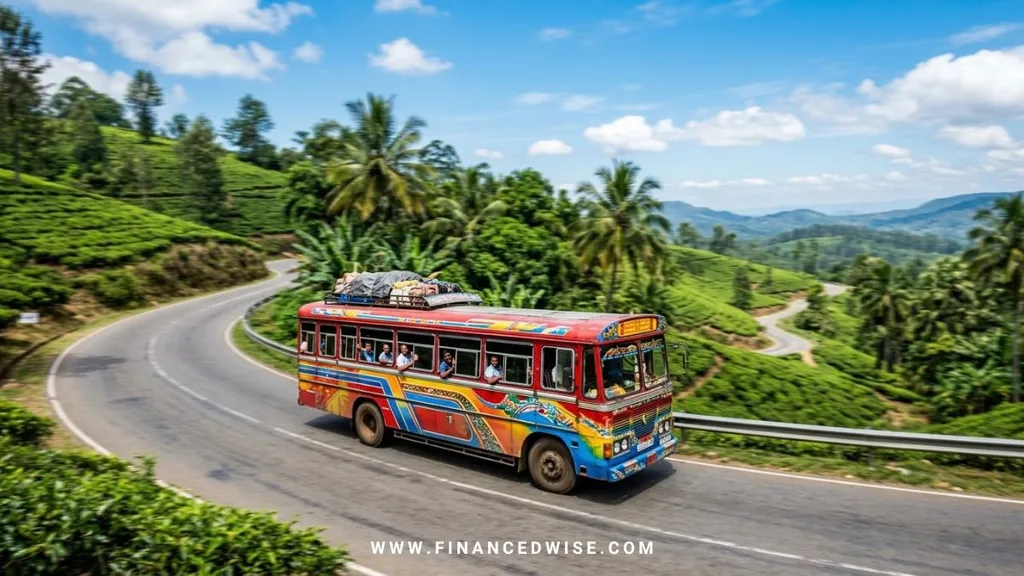
Buses are the cheapest way to cover distance and reach places the trains don’t. Fares are set by the National Transport Commission by class: normal, semi-luxury, luxury and expressway AC. For Colombo to Kandy, different sources put a normal or air-conditioned bus anywhere from about LKR 300 to LKR 800, which is roughly $1–$2.50. Online booking platforms charge more, and some list tickets at $11–$16 or higher.
Air-conditioned buses are more comfortable, but even they can be crowded and offer little luggage space. Buses work best for budget travellers with a backpack, rather than anyone with big suitcases.
The numbers side by side
| Private driver | Self-drive | Tuk-tuk / PickMe | Train | Bus | |
|---|---|---|---|---|---|
| Pricing style | Flat daily rate | Daily rate + extras | Per ride or per day | Per ticket | Per ticket |
| Typical cost | $50–$90/day | $25–$70/day + fuel + permit | ~LKR 100/km; LKR 4,000–6,000/day hire | LKR 240–600 on popular routes | LKR 300–800 on popular routes |
| Cost shared by group? | Yes, very well | Yes | Limited | No | No |
| Luggage space | High | High | Low | Medium | Low |
| Predictability | High | Medium | Medium | High | Medium |
| Best for | Groups, families, multi-stop days | Confident drivers, long stays | City hops, short day trips | Scenic long hauls | Tight budgets, light packers |
How cost per person changes with group size
The private driver’s economics depend on how many people share the car. Using $60 a day as an example:
| Travellers | Driver cost per person, per day |
|---|---|
| 1 | $60 |
| 2 | $30 |
| 3 | $20 |
| 4 | $15 |
Trains and buses charge per person, so they don’t get cheaper as the group grows. That’s why a solo traveller usually does better on public transport, while a family of four can come out ahead with a driver.
Example routes and what they cost
These are rough planning figures, not quotes:
- Colombo to Kandy (about 115 km): train in 3rd class from about LKR 240 and 2nd class about LKR 500 per person; bus roughly LKR 300–800 per person; private car at about LKR 140 per km comes to roughly LKR 16,000 for the whole car.
- Kandy to Ella: train in 3rd or 2nd class at LKR 300–600 per person at the station, with reserved seats costing more. This is the famous scenic ride, so it’s worth doing by train even if you use a driver elsewhere.
- Colombo to Galle: driving it uses the Southern Expressway, with tolls of roughly LKR 400–600. Trains along the coast are also very cheap.
- Airport to Negombo: a short PickMe tuk-tuk or car ride is typically LKR 500–800.
A sample 7-day budget for two (illustrative)
- Private driver: about $420 for seven days at $60, plus tips and possibly driver lodging. Roughly $455–$560 total, or $230–$280 each.
- Self-drive: about $245 in rental plus fuel and permit. Roughly $400–$600 total, depending on how far you drive.
- Trains, buses and tuk-tuks: a handful of train and bus tickets, around ten app rides and a few tuk-tuk day hires. Roughly $100–$150 total for two.
- A mixed plan: train for Kandy–Ella, a driver for three or four sightseeing days, and PickMe for the rest. This often lands between the two extremes while giving you the best experiences.
These are planning estimates. Exchange rates, fuel prices and season all move them.
Hidden costs to add to your transport budget
Before you compare quotes, check this list so you compare like with like:
- Driver’s meals and accommodation.
- Expressway tolls and parking.
- Extra-distance charges beyond the daily limit.
- Airport pickup fees and late-night surcharges.
- Tips ($5–$10 a day for a driver is the usual range).
- Local driving permit and rental deposit if you self-drive.
- Luggage fees or extra seat charges on some minivan and coach services.
- Card or booking fees on online ticket platforms.
Money-saving tips
- Mix modes. Use trains for the scenic long legs and a driver only on days with many stops.
- Book longer, pay less. Multi-day driver hires and longer car rentals usually have lower daily rates.
- Plan your route first. Driver and rental pricing depends on distance, so a tight itinerary saves money.
- Get inclusions in writing. Confirm fuel, tolls, parking and driver costs before you pay.
- Compare at least two quotes. Compare the same car type, the same days and the same inclusions.
- Use app pricing in cities. PickMe shows the fare upfront, so you avoid haggling.
- Book popular trains early. Reserved seats on the hill-country line sell out.
- Ask about peak season. Prices can rise in busy months, so check whether your dates fall in peak season.
Paying for transport: cash and cards
Carry small Sri Lankan rupee notes. Street tuk-tuks generally don’t take cards, drivers often can’t change large notes, and toll booths can have unreliable change. Larger driver and rental companies often accept bank transfer or card for deposits, but ask in advance and check for any card fees. Keep your foreign-card ATM withdrawals sensible, because small-denomination notes are what you need for tuk-tuks and tips.
How to decide
Ask yourself how much your time and comfort are worth.
- Strict budget, light luggage: train, bus and PickMe.
- Family or group of 3–4: private driver, because the per-person cost falls quickly.
- Confident driver, long stay: self-drive, once rates drop.
- Best of both: ride the train for the famous Kandy–Ella scenery, and hire a driver for the multi-stop days, like the south coast or the cultural triangle.
Frequently asked questions
How much should I budget per day for transport in Sri Lanka?
It depends on style. Budget travellers on trains, buses and tuk-tuks can spend very little, a private driver is roughly $50–$90 a day for the whole car, and self-drive is about $25–$70 plus fuel.
Is a private driver worth it for two people?
It’s the priciest option per person for a couple, but it saves time, handles navigation and parking and lets you cover many stops in a day. Many couples combine a driver for a few days with trains for the rest.
Do I need a special licence to drive in Sri Lanka as a tourist?
Yes. Visitors generally need a temporary Sri Lankan driving permit as well as their home licence or International Driving Permit. Check the current rules with the Department of Motor Traffic before you travel.
Is PickMe cheaper than a street tuk-tuk?
Usually. The app shows the fare upfront and uses standard per-kilometre rates, while street fares depend on negotiation. Coverage is better in cities than in rural areas.
How early should I book the Kandy to Ella train?
Reservations open about 30 days ahead, and reserved seats on popular trains can sell out, so book as soon as the window opens.
Should I tip my driver?
Tipping is customary. Many travellers give around $5–$10 a day, as a lump sum at the end of the trip.
Prices reflect 2026 research and change with fuel costs, exchange rates and season. Confirm current rates with providers before booking.
Sources
- Sri Lanka Railways reserved-seat fares:
- Sri Lanka Railways online booking:
- Ceylon Route, private driver costs:
- Sri Lanka Drivers Booking:
- SL Ride:
- Wonder of Ceylon, self-drive costs:
- NOHA car rental:
- Asia Fleet, rental prices in LKR:
- One Ceylon, tuk-tuk prices and per-km car hire:
- Sri Lanka Spirit, tuk-tuk vs PickMe:
- Brunette at Sunset, tuk-tuk rental:
- Induwara.lk, train fares:
- Induwara.lk, bus fares:
- Far Out Travel, Kandy to Ella:
- Gecko Routes, Colombo to Kandy:
- The Sri Lankan Guideline, airport guide:
- Airport Transfer Portal, CMB to Colombo costs:
- TollGuru, expressway tolls: